Windshield Leak Signs & Causes | Redwood City, CA Guide
- September 22, 2026
- Redwood City, CA
Windshield Leak Warning Signs Every Peninsula Driver Should Know
Anyone who has lived on the Peninsula for a few years knows the rhythm of it. Damp morning, fog hanging off the hills out by Emerald Hills, then by noon the sun is out like the weather changed its mind. That back and forth is rough on a car. The windshield seal especially. Most drivers around San Mateo County never think about it until something feels off inside the cabin, and by then water has usually been getting in for a while.
The frustrating part about leaks is they stay quiet. They show up as a smell you cannot place, or a window that fogs and just will not clear, or a wet floor mat you blame on your shoes after a rainy walk. This guide goes through how to catch a leak early, what is really causing it on local roads, and when a quick check turns into something you want handled soon.
What Are the First Signs of a Windshield Leak?
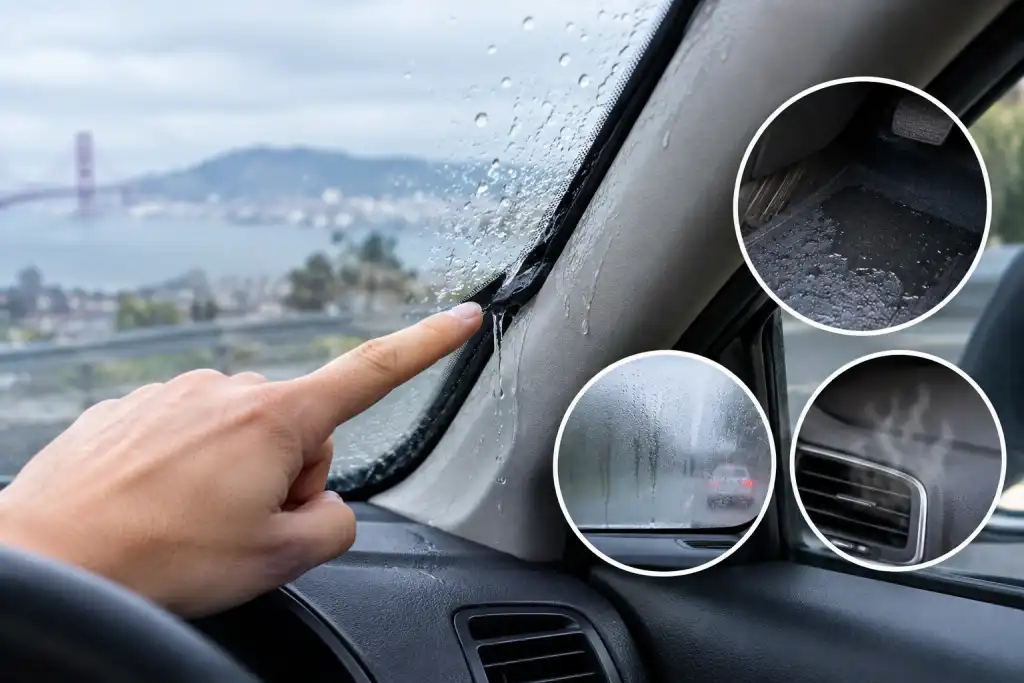
The first signs are almost always a musty smell in the cabin, water spots on the dash after it rains, and windows fogging up that refuse to clear. Those show up long before you ever see actual water.
Honestly, most people around Redwood City notice the smell before anything else. Moisture gets trapped under the carpet or behind the dash and turns into that damp, basement kind of odor. Air freshener covers it for a day, then it comes right back. After that you start fighting interior fog, usually on those gray Peninsula mornings when the defroster seems outmatched. If you are wiping the inside of the glass more than the outside, water is sneaking in somewhere. Damp carpet, little pools near the door frames, a faint stain creeping along the headliner. Those are the later signs, and they mean the leak has been working for a while.
How Do You Find Where a Windshield Is Leaking?
You find it by checking the entire edge of the glass for gaps in the seal, looking over the frame for corrosion or impact marks, and tracing the water stains back toward where they started. The actual source is usually higher up than where the water collects.
This trips a lot of people up. Water rarely shows where it gets in. It runs down the inside of the A pillar or slips behind the dash and turns up somewhere lower, so the puddle lies to you. A real inspection follows the whole windshield edge, hunting for dried or cracked sealant, anything pulled away at the corners, any sign the glass shifted slightly in its frame. Old seals go brittle and let go at the corners first, almost every time. That kind of diagnostic work is what our mobile windshield leak repair service handles right at your driveway, because finding the true entry point usually takes trained eyes and a little patience.
Why Does My Windshield Leak Only After Heavy Rain?
Because a small seal gap can usually shrug off light moisture but gets overwhelmed when the water volume and pressure jump. The failure stays hidden until conditions push enough water through it.
We see this pattern constantly, here and over in Belmont and San Carlos too. A hairline gap in tired sealant handles a drizzle fine. Then a proper storm rolls in off the coast, water sheets across the glass, and that same little gap simply cannot keep up. Freeway driving makes it worse. The pressure and spray you hit on Highway 101 or El Camino Real forces water into openings that would stay dry on a parked car. So your windshield can feel perfectly fine on the commute and still let water in overnight during a real downpour. Annoying, but it makes sense once you think about it.
How Does Peninsula Weather Affect Windshield Seals?
The daily swing from cool damp mornings to harsh afternoon UV makes the rubber and adhesive expand, contract, and break down faster than they would in a milder climate.
This local factor matters way more than people give it credit for. That fog to sun jump forces the seal to flex every single day, and over a couple years the rubber hardens, loses its grip, and starts pulling away at the edges. California sun is brutal on adhesive. It dries it out and cuts its working life short. Cars that sit outside, which is most of them in the apartment heavy parts of Redwood City, age noticeably quicker than anything tucked in a garage. Add the debris flying off our busy corridors and you get the chips and seal stress that quietly become leaks. It is also why a repair done without accounting for our weather tends to fail a second time.
Can a Leaking Windshield Cause Long-Term Damage?
Yes. Left alone, it leads to mold, frame corrosion, electrical problems, and ruined interior. Ignoring it almost always costs more than catching it early would have.
Newer cars run sensors and wiring behind the dash and down the pillars, and water finds all of it eventually. We have watched owners chase electrical gremlins for months with no idea the glass was the real culprit. Past the electronics, trapped moisture rots padding, stains the headliner, and lets rust take hold in the windshield frame itself, which is structural and not something you want compromised. Then there is mold, which is a health thing on top of a repair bill. A leak is hardly ever just cosmetic, and that is exactly why pairing early detection with timely auto glass repair protects a lot more than the glass.
How Can You Prevent Windshield Leaks Long-Term?
You prevent them by keeping the seal clean and shielded, parking in shade or a garage when you can, dealing with chips fast, and making sure any new glass is installed properly the first time.
Prevention really starts at installation. A surprising number of the leaks we fix trace straight back to rushed work from some other shop. Good materials and full cure time matter, more so in our climate than most. After that it is the simple stuff. Rinse grit off the seal area, skip the all day sun parking when there is a better option, and treat small chips before our temperature swings spread them into the seal. Jumping on minor damage early is the cheapest insurance against a major leak, and it goes hand in hand with routine windshield chip and crack repair before a tiny problem migrates somewhere expensive.
Frequently Asked Questions
How can I test for a windshield leak at home?
Try the garden hose method. Run water across the glass while someone watches the edges from inside. A pro inspection is more reliable though.
Is a small windshield leak really worth fixing right away?
Yes, because it rarely stays small. Trapped moisture quietly damages electronics, padding, and the frame, turning a cheap fix into an expensive one.
Why does my car smell musty after it rains in Redwood City?
That musty smell almost always means a seal or windshield leak. Water soaks into padding behind the dash, and mildew sets in within days.
Does insurance cover windshield leak repair on the Peninsula?
Many California policies do, especially when road debris causes it. Coverage depends on your policy and cause, so confirm the specifics with your carrier.
How long do windshield seals typically last in California?
Often five to seven years here, faster than the national average. Strong UV and daily temperature swings wear them down, and outdoor parking speeds it up.
Don't Wait for the Water to Win
Catching a leak early is genuinely the line between a quick seal fix and a torn up interior. If any of this sounded familiar, the smell, the fog that will not clear, the damp mat, it is worth a closer look before the next storm rolls through. Our team has spent over 30 years sorting out exactly these problems for Redwood City and Peninsula drivers, and we come to you. Whenever it works for you, a quick mobile windshield leak inspection will tell you what is actually going on.
Trending Posts
-
 22 Sep 2026 Redwood City, CAWindshield Leak Signs & Causes | Redwood City, CA Guide
 -
22 Sep 2026 Redwood City, CASigns Your Window Regulator Is About to Fail | Redwood City Guide
-
 26 Aug 2026 Redwood City, CAMobile vs. Shop Auto Glass Repair: A Peninsula Driver's Guide
 -
26 Aug 2026 Redwood City, CARedwood City: Driving With a Chipped Windshield
-
25 Aug 2026 Redwood City, CAWhy Do Car Power Windows Stop Working? Redwood City Driver's Guide
-
08 Jul 2026 Redwood City, CAHow Long to Wait Before Driving After a Windshield Replacement (Redwood City Guide)
-
08 Jul 2026 Redwood City, CACar Back Window Smashed in Redwood City? What to Do First
-
03 Jun 2026 Redwood City, CAHow Long Can You Legally Drive With a Cracked Windshield in Redwood City, CA?