
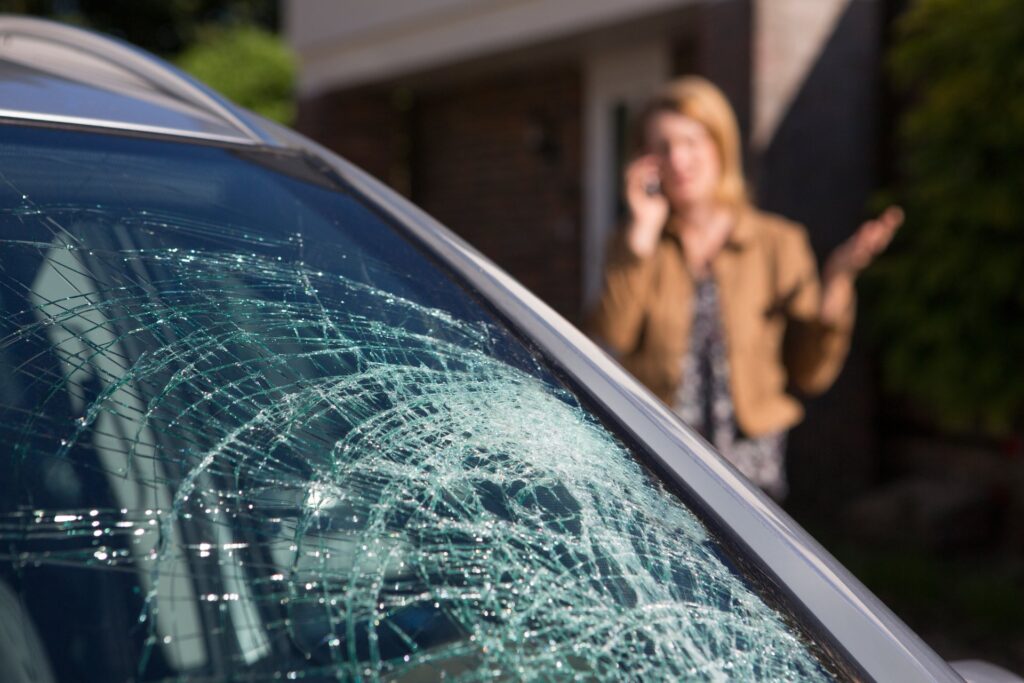
You’re heading down Woodside Road, coffee in the cup holder, and you spot it. That little chip from last month has grown a tail overnight, and now there’s a crack creeping across the bottom of your windshield. You’re wondering what every Peninsula driver eventually asks: can I keep driving like this, or am I asking for a ticket?
It’s a fair question, and the answer is more nuanced than a simple yes or no. California doesn’t hand out a tidy crack-length limit you can memorize. What it has instead is a rule about vision, and how that rule gets applied depends a lot on where the damage sits. Here’s what actually matters for drivers around Redwood City and the rest of San Mateo County.
Is It Illegal to Drive With a Cracked Windshield in California?
There’s no specific crack-length law in California, but it is illegal to drive with damage that obstructs the driver’s view. An officer can cite you under the state vehicle code if a crack sits in your line of sight, regardless of how long it is.
This trips people up because they expect a number. They want to hear that anything under six inches is fine. That’s not how it works here. The standard is whether the damage interferes with your ability to see the road clearly. A short crack right in front of your eyes is a bigger legal problem than a long one along the bottom edge where you never look. Two cars with nearly identical damage can get treated completely differently depending on placement.
Where the Crack Sits Matters More Than How Long It Is
A crack in the driver’s primary viewing area is the one that gets you pulled over and the one that genuinely puts you at risk. Damage near the edges or low on the passenger side is far less likely to draw attention.
There’s a zone, roughly the area swept by your wiper on the driver’s half, where your eyes spend almost all their time. Glass techs and law enforcement both watch that zone closely. A crack running through it scatters light, especially when you’re squinting into low morning sun over the hills or driving home with headlights glaring through the fog off the bay. That same crack three inches lower might be a non-issue. So before you panic about length, look at where it actually lives on the glass.
How a “Fix It” Ticket Works in San Mateo County
Most windshield citations in California are issued as correctable violations, often called fix-it tickets. You get a set period to repair the damage, show proof, and the citation is typically dismissed for a small fee instead of a larger fine.
That sounds manageable, and it usually is. But the catch people miss is the time and hassle. You’re now on a deadline, getting the work done, getting it signed off, and handling paperwork on top of everything else that week. If you’ve already got a citation, scheduling a mobile windshield replacement that comes to you is the fastest way to clear it without burning a day off work.
Why a Small Crack Rarely Stays Small Around Here
Cracks spread, and the Peninsula’s driving environment speeds that up. Temperature swings between cool, damp mornings and warm afternoons flex the glass repeatedly, turning a stable chip into a moving crack faster than most drivers expect.
I’ve seen this play out with local commuters plenty of times. Someone picks up a star chip on Highway 101, figures they’ll deal with it later, and parks in the sun outside their office downtown. Cold morning, hot dashboard by noon, repeat that for a week or two, and the chip runs. Add the vibration from rough freeway stretches and construction near Sequoia Station, and you’ve got a windshield headed for failure. The drivers who act in the first few days almost always have more options, and cheaper ones, than those who wait.
When a Cracked Windshield Stops Being a Repair Job
Once a crack enters your direct sightline, reaches the edge of the glass, or extends past roughly three inches, replacement usually becomes the safe and legal answer rather than a patch.
Repairs work well for fresh, contained chips. But a crack that’s already traveled has compromised the structural role the windshield plays, and that role is bigger than people think. Your windshield helps the roof hold its shape in a rollover and gives the passenger airbag a surface to push against when it deploys. At that point, a professional auto glass replacement isn’t an upsell, it’s the difference between glass that does its job in a crash and glass that doesn’t.
What This Means for the Safety Systems in Newer Cars
If your vehicle is from roughly the last ten years, a cracked windshield can also throw off the camera that runs your driver-assist features. Lane departure warnings and automatic braking rely on a sensor mounted behind the glass, and damage in front of it can degrade how those systems perform.
That little camera near your rearview mirror is reading the road through the same glass that’s now cracked. After any replacement on these vehicles, the camera needs recalibration so the systems aim where they should. A good installer will flag this upfront and build it into the timeline, so the safety features you paid for keep working.
The Practical Move for Redwood City Drivers
So how long can you drive with a cracked windshield?
Long enough to get it handled properly, and not much longer than that. The law gives you some room, but the Peninsula’s weather, roads, and traffic don’t. A crack that’s legal and stable today can be a citation and a safety problem by next week.
If the damage is anywhere near your sightline, getting bigger, or already drawing your eye while you drive, get it assessed now while you still have choices. Our team handles same-day mobile service across Redwood City and the surrounding Peninsula, so you don’t have to rearrange your life around it. Reach out for a free quote and we’ll tell you straight whether you’re looking at a quick repair or a replacement.