Why Is My Sunroof Leaking? A Redwood City Driver's Guide to Seal Failure & Water Damage
- June 3, 2026
- Redwood City, CA
Why Is Your Sunroof Leaking? A Redwood City Driver’s Guide
You get in the car after a Peninsula rainstorm, sit down, and something’s off. The headliner feels damp. Maybe there’s a little water pooled in a cupholder you swear was dry yesterday. A leaking sunroof almost never gives you a heads up. By the time you notice it, the water has usually been getting in for a while.
This guide walks through why sunroofs leak, why the weather around here makes it worse, and what you can actually do before a small drip turns into a real repair bill.
What Actually Makes a Sunroof Leak?
Most leaks trace back to one of three things. A worn out seal, a clogged drain, or cracked glass. The rubber gasket around the glass does the heavy lifting, and it doesn’t last forever. It dries out, gets stiff, and stops pressing tight against the frame the way it used to.
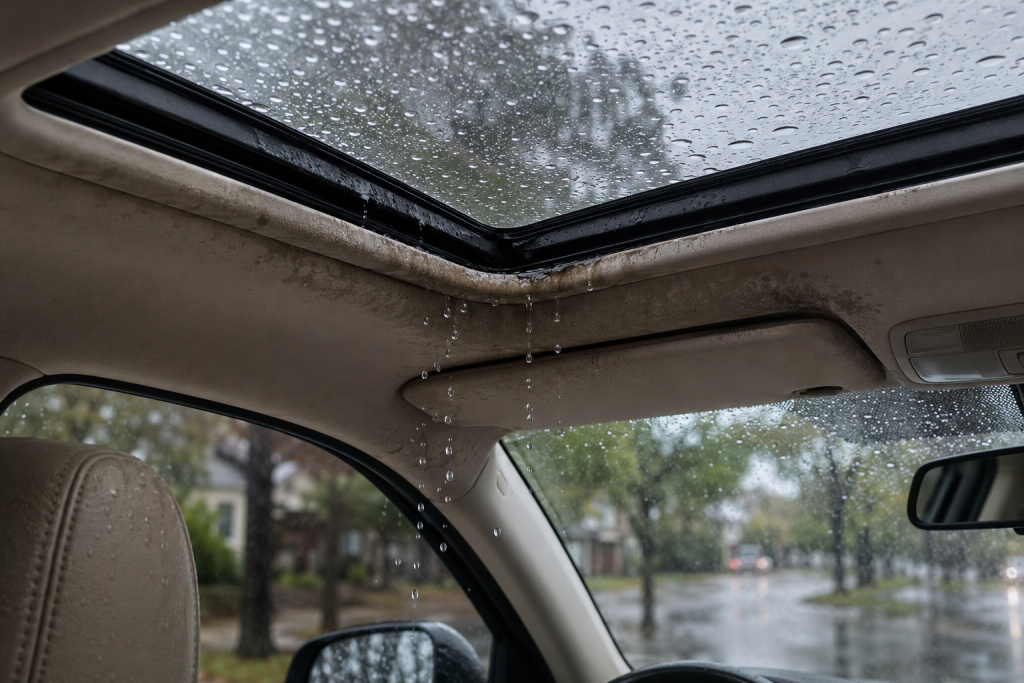
People almost always blame the glass first. Usually it isn’t the glass. More often it’s the seal, or it’s the little drain tubes that are supposed to carry water down and out the bottom of the car. Those tubes love to clog with leaves and grit. Once they do, water has nowhere to go, so it backs up and spills into the cabin instead.
How the Weather Here Wears Seals Out Faster
Redwood City is harder on sunroof seals than you’d think. Cool, foggy mornings, then warm and dry by the afternoon, day after day. That back and forth makes the rubber expand and shrink constantly. Do that a few thousand times and the gasket gets brittle a lot sooner than it would somewhere with steadier weather.
Then there’s the summer sun. Park outside at an office lot off 101 or in an apartment lot over in Redwood Shores, and the UV slowly bakes the rubber dry from the outside in. Nothing fails dramatically. It just quietly gets worse until the first heavy rain finds the weak spot for you.
Signs Your Sunroof Seal Is Going
Catching this early is the difference between a quick fix and a soaked interior. A few things to watch for.
A musty smell that shows up after it rains usually means moisture is sitting in the headliner or the carpet. Damp patches on the visors, the dome light, or the A-pillars mean water is tracking down from the sunroof frame. Wind noise at freeway speed that wasn’t there before is another big one, since it often means the seal has shrunk or lifted away from the frame. You might also see condensation on the inside of the glass that takes way longer than normal to clear.
And if there’s staining around the opening or the headliner feels soft and spongy when you push on it, water has already been getting in for a good while.
Can a Small Crack Really Turn Into a Big One?
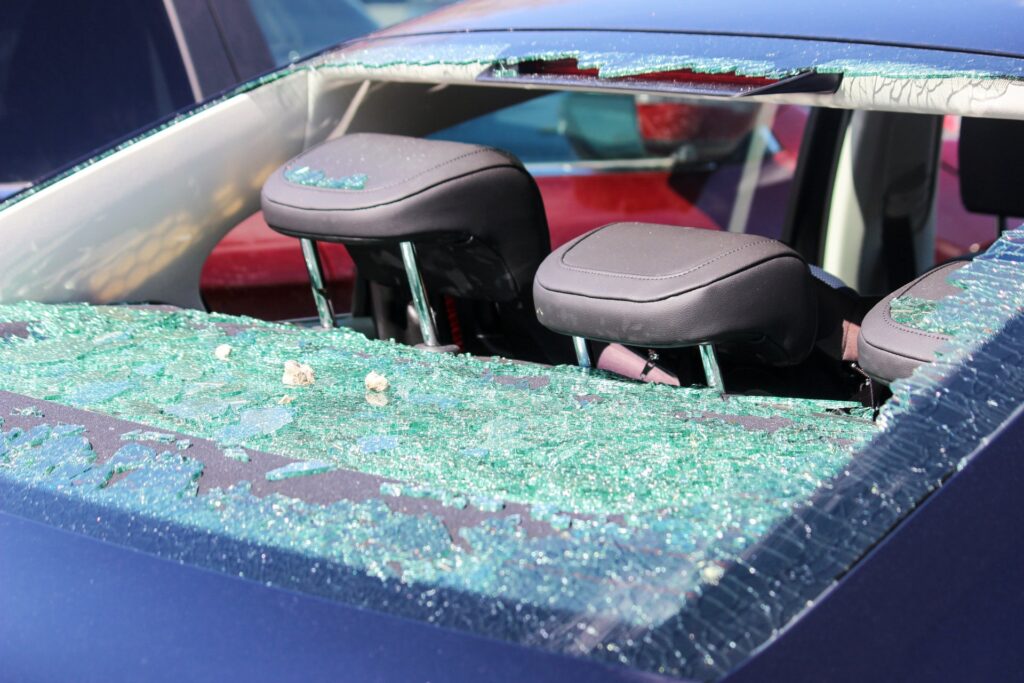
Yep, and faster than most people expect. A chip or a thin crack in sunroof glass acts a lot like a windshield chip. Heat makes the glass expand, cold makes it contract, and that constant stress pushes the crack to spread.
Around here that’s a real problem. You leave a cool garage in the morning and park in full afternoon sun a few hours later. That swing puts serious pressure on damaged glass. A crack you could barely find in spring can spiderweb across the whole panel by July. And the moment water gets through that crack, it stops being just a glass problem. Now you’re looking at electronics, upholstery, and possibly mold.
What It Really Costs to Ignore It
This is the part that catches people off guard. The water doesn’t stay where it comes in. It runs along the headliner, down the pillars, and ends up under the carpet where you can’t see any of it.
Newer cars run wiring and control modules under the seats and along the floor. Water sitting near that stuff leads to weird electrical issues, corroded connectors, and warning lights that seem to come out of nowhere. Wet carpet padding holds moisture against the floor, and within a week or two you’ve got mildew and a smell that never fully leaves. A worn rubber seal that would have been a small job becomes a multi part repair if it sits long enough.
Is It Safe to Drive With a Cracked Sunroof?
A small, stable chip isn’t an emergency. But cracked sunroof glass is compromised and unpredictable. These panels are tempered, and once the integrity is gone, a rough pothole on a side street or a sharp temperature change can cause it to let go without much warning.
There’s also the obvious issue. Every day you drive on cracked glass is another day a surprise Peninsula shower can get inside. So the honest answer is that it isn’t worth gambling on, especially when mobile sunroof glass replacement can just come to your driveway instead of you risking the drive.
How to Stop Sunroof Leaks Before They Start
Here’s the good news. Most of these leaks are avoidable with a few minutes of attention a couple times a year.
Wipe the rubber seal down with a damp cloth every few months so grit isn’t constantly grinding it down. Hit it with a silicone based rubber conditioner to keep it flexible against all that sun and dry afternoon air. Check the drains by slowly pouring a little water into the corners of the opening and making sure it comes out clean underneath the car. If it backs up instead, the drains are clogged.
Park in shade or a garage whenever you can swing it. Even partial cover slows down the UV damage a lot. And anytime you’re already having other auto glass services done, ask the tech to take a quick look at the sunroof seals while they’re there. Catching it early is always cheaper than fixing water damage later.
When Replacement Is the Only Real Fix
If the glass is cracked, the seal is too far gone to recondition, or water has already been getting in, replacement is the answer. Patching a failing seal or sealing over a cracked panel is a band aid, and it tends to fail again at the worst possible time, usually mid storm.
A proper replacement handles the glass, the seal, and the surrounding frame together as one piece. That’s the only approach that actually stops a leak instead of chasing it around.
Get Ahead of the Next Peninsula Storm
A leaking sunroof doesn’t fix itself, and around here the next rain usually isn’t far off. If you’re noticing damp spots, a musty smell, or a crack that keeps creeping, it’s worth handling before the cost stacks up.
AJ’s Mobile Auto Glass Specialist has spent over 30 years helping Redwood City drivers stay ahead of exactly this, and we come to you. Request a free estimate and get it sorted before the next storm rolls in.
Frequently Asked Questions
Can clogged sunroof drains cause leaks?
Yes. Clogged drain tubes are one of the most common causes of sunroof leaks because water backs up into the cabin instead of draining outside properly.
Is a leaking sunroof expensive to fix?
Minor seal or drain repairs are usually affordable, but long-term leaks can lead to mold, electrical damage, and interior repairs that become much more expensive.
Can I drive with a cracked sunroof?
A small crack may seem harmless, but temperature changes and road vibration can cause the glass to spread or shatter unexpectedly.
Does insurance cover sunroof replacement?
Coverage depends on your policy and how the damage occurred. Comprehensive insurance may help cover replacement costs in some cases.
How do I know if my sunroof seal is failing?
Common signs include damp headliners, musty smells, wind noise, slow condensation clearing, and water stains near the roof opening.
Trending Posts
-
 26 Aug 2026 Redwood City, CAMobile vs. Shop Auto Glass Repair: A Peninsula Driver's Guide
 -
26 Aug 2026 Redwood City, CARedwood City: Driving With a Chipped Windshield
-
25 Aug 2026 Redwood City, CAWhy Do Car Power Windows Stop Working? Redwood City Driver's Guide
-
 08 Jul 2026 Redwood City, CAHow Long to Wait Before Driving After a Windshield Replacement (Redwood City Guide)
 -
08 Jul 2026 Redwood City, CACar Back Window Smashed in Redwood City? What to Do First